Worldwide Door-to-Door Delivery!

Are you still using tea bags and getting weak, dusty flavor? Poor brewing techniques hide the complex flavors of premium loose-leaf tea. Tea infusers and steepers elevate your daily ritual, ensuring every cup is rich, clean, and perfectly extracted.
Tea infusers and steepers improve loose-leaf tea brewing by containing the leaves while allowing them ample space to fully expand and circulate in the hot water.1 This full infusion process maximizes the extraction of flavor, aroma, and beneficial compounds, preventing over-steeping and ensuring a clean, leaf-free cup.
The difference between a mediocre cup and an extraordinary one often comes down to the quality of your brewing equipment. Let's explore the essential tools that transform simple hot water and leaves into a gourmet experience.
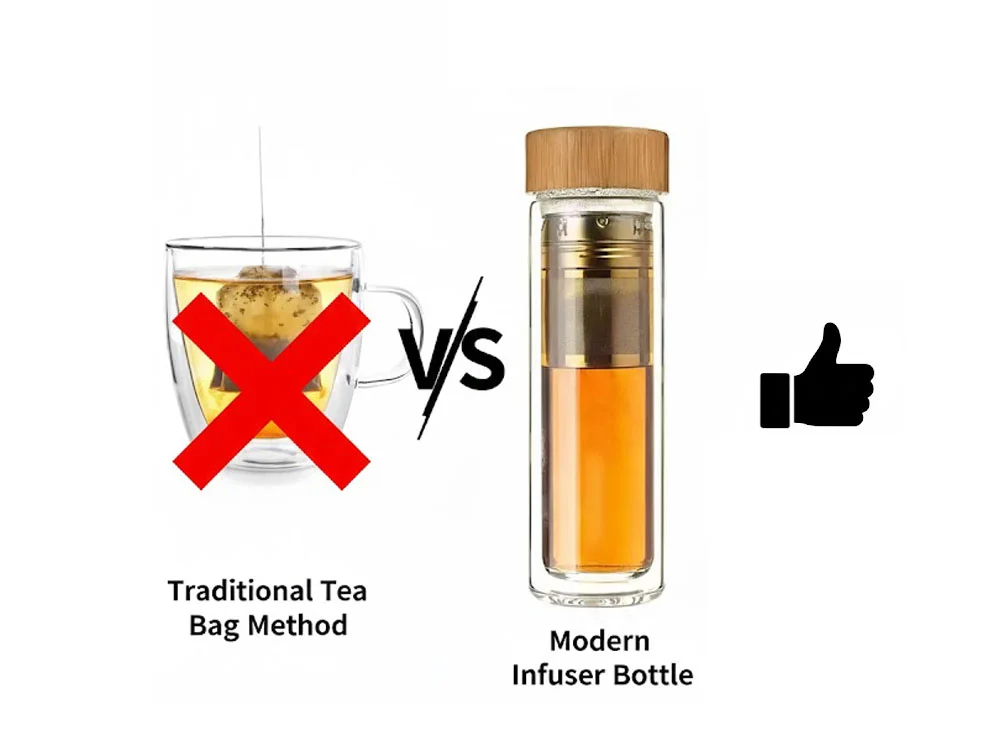
The terms "infuser" and "steeper" are often used interchangeably, leading to confusion. What is the difference between a tea infuser and a tea steeper?
While often used synonymously, a tea infuser generally refers to a device placed directly inside the cup or pot during brewing (like a mesh ball or basket), while a steeper often refers to a brewing vessel itself (like a French press or a travel bottle with a filter) or a dedicated basket designed for full immersion and easy removal.
Fundamentally, both tools serve the same core function: separating the leaves from the water at the end of the brewing cycle.
The key distinction lies mostly in size and application. Infusers (often smaller, like a tea ball or novelty silicone shape) hold the leaves in a contained space inside the water. Steepers (typically larger, basket-style, or integrated into a teapot) are generally preferred by connoisseurs because they provide more space for the leaves to expand—a crucial process known as "the unfurling." When leaves fully unfurl, they release their complex flavor profile optimally. Conversely, a small, tightly packed infuser can restrict this movement, leading to weaker, under-extracted flavor. The most important feature, regardless of the name, is that having a tea infuser to filter the tea leaves is the most important feature for a clean brew.
| Tool Type | Typical Form/Size | Best for |
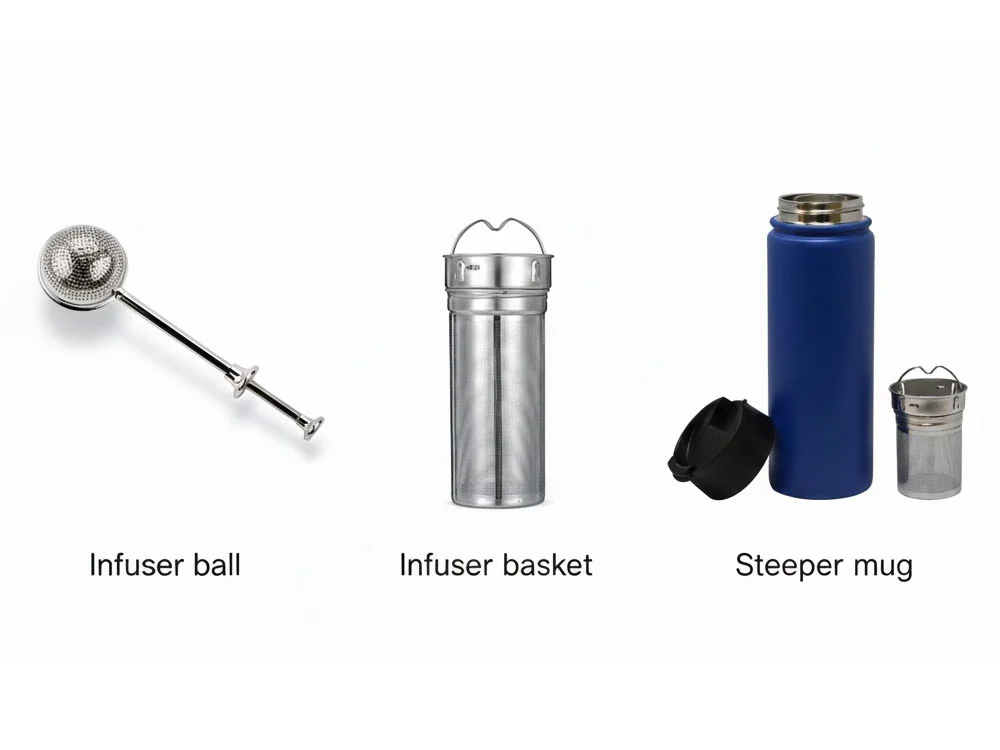
| Infuser Ball/Mesh | Small, chained metal ball or silicone novelty shape. | Single-serve, quick brewing, finer tea cuts. |
| Infuser Basket/Steeper | Large, deep mesh cylinder/basket that sits inside the cup. | Optimal flavor, full-leaf teas (allows for expansion). |
| Steeper Bottle/Mug | Integrated filter system built into a travel vessel. | On-the-go convenience, temperature retention. |
Pouring hot water over tea leaves seems easy, but beginners often make mistakes that result in bitter or weak tea. What is the best way to brew loose-leaf tea at home?
The best way to brew loose-leaf tea at home involves three key practices: using the correct water temperature for the specific tea type, measuring the proper tea-to-water ratio (approx. 1 tsp per 8 oz), and allowing the leaves ample room to steep in a quality, spacious infuser for the prescribed time.
Mastering these steps ensures the natural, delicate notes of your loose-leaf tea are fully expressed.
The two most critical variables in the brewing process are temperature and time. Different teas require different treatments: delicate green and white teas can be easily "burned" by boiling water, which releases too many tannins and results in a bitter taste. Robust black and herbal teas, however, require a rolling boil to fully extract their deep flavors.
| Tea Type | Ideal Water Temp | Ideal Steep Time |
| Green Tea | 160°F–180°F | 1–3 minutes |
| Black Tea | 200°F–212°F | 3–5 minutes |
| White/Oolong Tea | 170°F–200°F | 3–5 minutes |
| Herbal Tea | 212°F (Boiling) | 5–7 minutes |

As tea master Mei Ling points out, "A quality tea infuser gives the leaves freedom, but a thermometer gives the brewer freedom. Knowing the exact temperature for each tea is the secret to unlocking its true potential." Precision control over water temperature is easily achieved using an electric kettle with variable temperature settings.
Brewing loose-leaf tea on the road can be messy and inconvenient. Which tea infuser bottle is most convenient for travel?
The most convenient tea infuser bottle for travel is a double-wall stainless steel thermal flask with an integrated, removable mesh filter. This combination provides superior heat retention, unmatched durability for transport, and an all-in-one brewing solution that minimizes leaks and breakage worry.
The ideal travel companion must balance ease of use with rugged reliability.
When portability is paramount, stainless steel is the best choice. If you need a tea flask that can keep beverages hot or cold for a long time, stainless steel is the best choice because its insulation performance allows for both heat and cold retention. Stainless steel is also more durable, making it ideal for travel, hiking, and other outdoor activities where a glass bottle might be too fragile.A double-wall thermal tea flask provides hours of temperature stability, meaning you can brew your tea in the morning and enjoy it at the perfect temperature hours later on a long trip. The filter can be either bottom-mounted (for steeping and serving) or top-mounted (for easy removal of leaves).
With countless options available, finding the right infuser mug or bottle can feel overwhelming. How to choose the best infuser mug or tea travel bottle?
The best infuser mug or tea travel bottle should be chosen based on its material (stainless steel for heat retention or glass for visibility), its infuser size (to allow leaves to expand), and the security of its lid, which prevents leaks during transport.
The choice is a balance between your personal preference for aesthetics and your practical need for performance.
| Material | Primary Benefit | Drawback | Ideal User |
| Stainless Steel | Superior insulation (hot/cold retention), extreme durability. | Opaque (cannot view tea color), requires food-grade standard. | Commuter, outdoor enthusiast, long workdays. |
| Glass (Borosilicate) | Aesthetic appeal, transparency (showcases tea), flavor purity. | Less durable (needs protection), lower heat retention. | Desk worker, home use, visual tea enthusiast. |
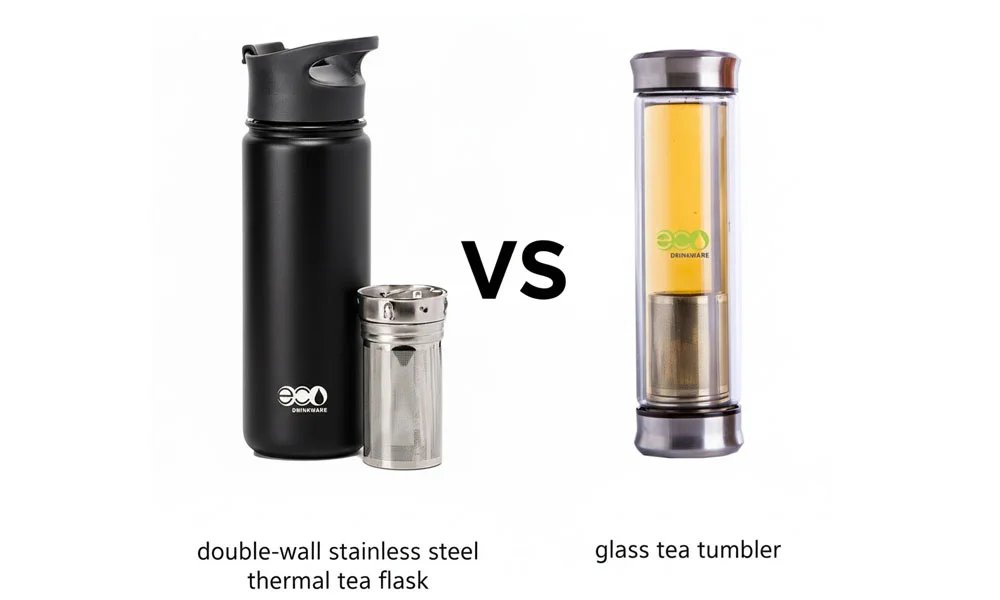
For those who prioritize the visual experience of blooming teas, Glass tea tumblers, on the other hand, are very popular because their transparency beautifully beautifully showcases different teas, floral teas, and tea leaves. If you’re worried about the glass being fragile, you can use a silicone sleeve to protect the delicate and elegant glass cup.
For those who brew for multiple servings, the teapot itself becomes the primary brewing vessel. What is the best teapot for brewing loose-leaf tea?
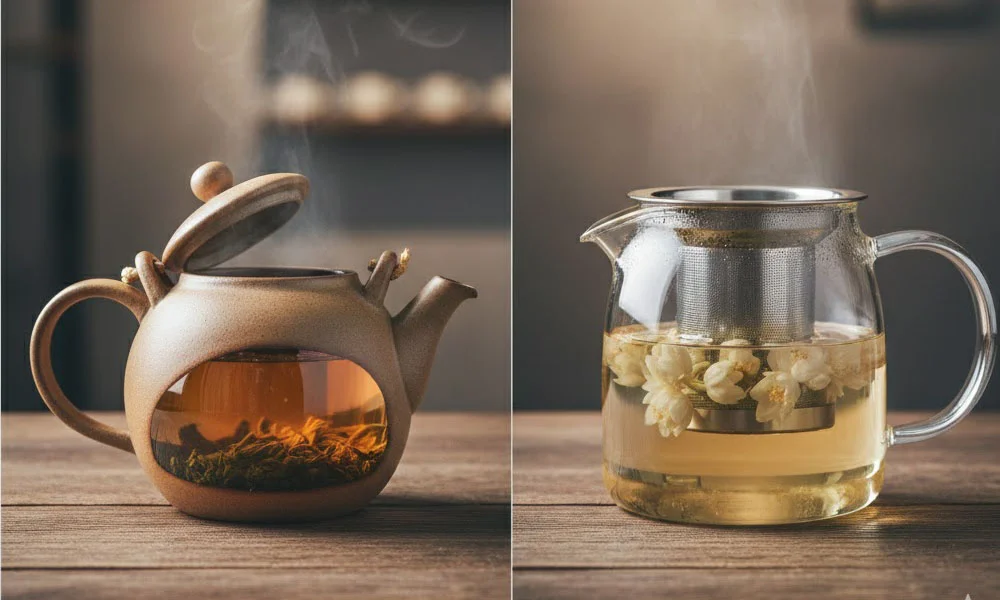
The best teapot for brewing loose-leaf tea is a high-quality ceramic or glass model featuring a large, integrated infuser basket. The teapot material retains heat effectively, while the spacious basket ensures leaves can fully circulate and steep uniformly, resulting in a perfectly balanced brew for multiple cups.
The teapot is where the artistry and communal aspect of tea culture truly come alive.
The best teapots are those that offer thermal stability. Ceramic and porcelain teapots retain heat efficiently, ensuring the tea stays warm for a second or third pour. Glass teapots, often made from borosilicate glass, are less about heat retention and more about the visual ceremony—perfect for viewing blooming or green teas. For optimal flavor, the internal infuser basket must be large and deep enough to submerge the leaves completely, allowing for maximum expansion.10 It should also be easily removable once the tea is perfectly steeped to prevent over-extraction.
The material of the infuser itself impacts both the taste and longevity of the brewing device.Are stainless steel mesh infusers better than silicone ones?
Stainless steel mesh infusers are generally considered superior to silicone ones because high-grade stainless steel (like 18/8) is non-reactive, non-staining, and offers a finer mesh for better filtration. Silicone infusers, while fun and pliable, may sometimes absorb or impart subtle flavors, impacting the purity of the tea.
For daily, reliable performance, stainless steel is the established standard.

The quality of the infuser's mesh directly affects the cleanliness of the tea. A very fine, food-grade stainless steel mesh prevents small tea particles, such as those found in rooibos or fine-cut black teas, from escaping into the cup. Silicone infusers often have larger perforations, leading to more "tea sludge" at the bottom of the mug. Furthermore, while stainless steel is inherently durable and neutral, low-quality silicone can degrade over time, sometimes imparting a slight, unwanted synthetic smell or taste, especially with delicate teas like white or green varieties. For businesses looking to customize branded tea cups with premium brewing components, stainless steel provides the best quality assurance.
Newcomers to loose-leaf tea often encounter frustrating issues that can be easily avoided. What mistakes should beginners avoid when brewing loose-leaf tea?
Beginners should avoid common mistakes such as using boiling water for delicate teas (like green), steeping tea leaves in a small, restrictive ball infuser, and over-steeping the tea (especially black tea), which results in excessive bitterness and astringency.
Avoiding these three pitfalls is the fastest route to consistently perfect tea.
| Mistake | Impact on Tea | Correction |
| Using Water Too Hot | Burns delicate leaves, resulting in immediate bitterness and astringency. | Use a temperature-controlled kettle or let boiling water cool for 2–5 minutes. |
| Restricting Leaf Expansion | Results in weak, under-extracted flavor because the water can’t reach all parts of the leaf. | Use a large infuser basket, allowing ample room for leaves to unfurl. |
| Over-Steeping | Releases too many tannins, making the tea excessively bitter and often harsh. | Use a timer and remove the infuser immediately after the recommended steep time. |
By using a proper vessel and filter, such as a thermal tea flask or a glass tea bottle, beginners can easily control the steeping process and avoid these mistakes. If you would like to customize branded tea bottles, that is also a great option to ensure the product features a high-quality, large infuser to guarantee an optimal brewing experience for your customers. Visit www.eco-drinkware.com for our full line of customizable tea-steeping accessories and drinkware.
Infusers and steepers are essential for clean, flavorful loose-leaf brewing.The right choice depends on your needs: stainless steel for durable travel, or glass for the elegant home tea ritual.
 English English
  Español
 Deutsch
 Português
 Français